

How Does A Rear Entry Handicapped Van Squat Repair
In order to service and fine-tune the rear derailleur, we must outset sympathise how it works. This article helps give a basic understanding of how rear derailleurs work to aid you lot as you work on servicing your own rear derailleur.
1
Derailleur Mechanics
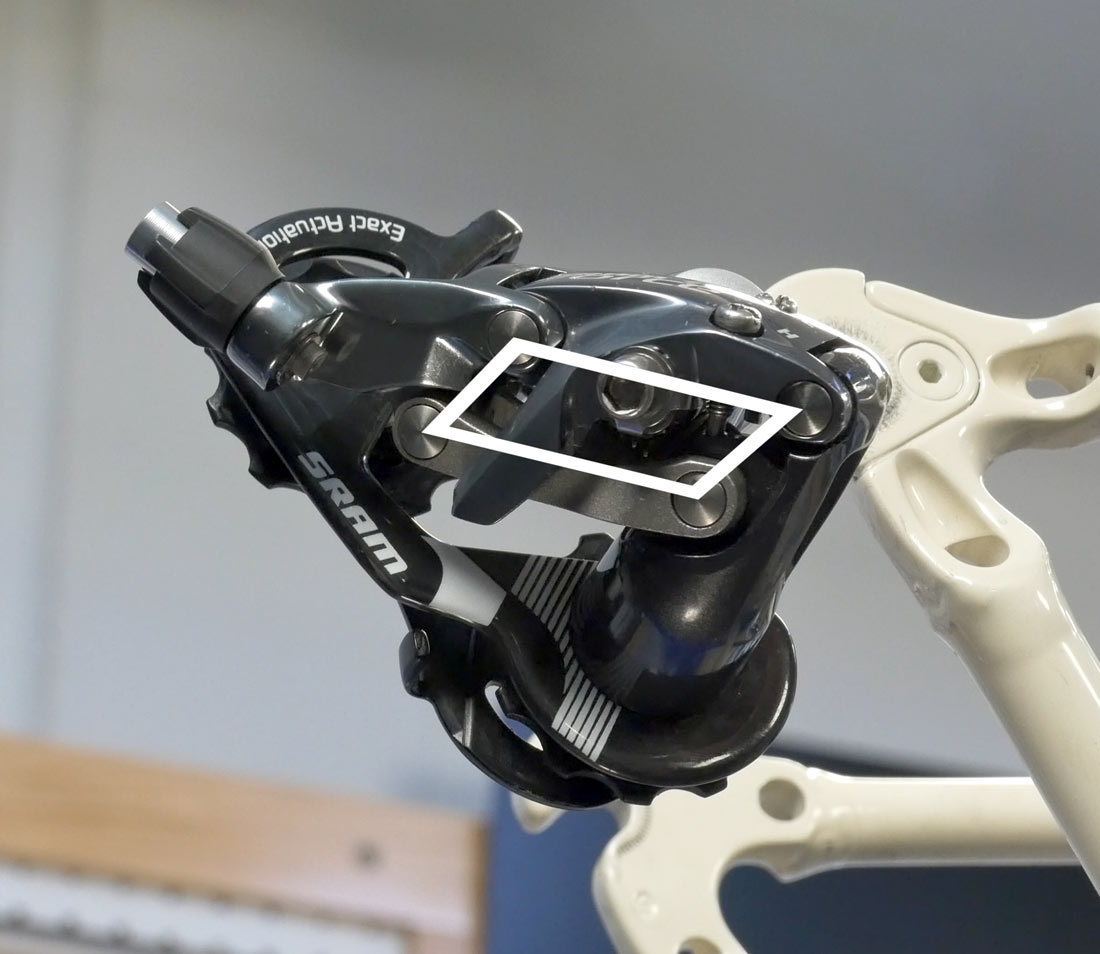
The rear derailleur is the machinery that shifts the chain at the rear sprockets. There are many different models but they all share the aforementioned basic design and functionality. Derailleurs are secured to the bike with a mounting bolt to the frame'southward derailleur hanger. The upper pivot to the derailleur is connected to the lower pivot by a linkage system that forms a parallelogram (0:52).
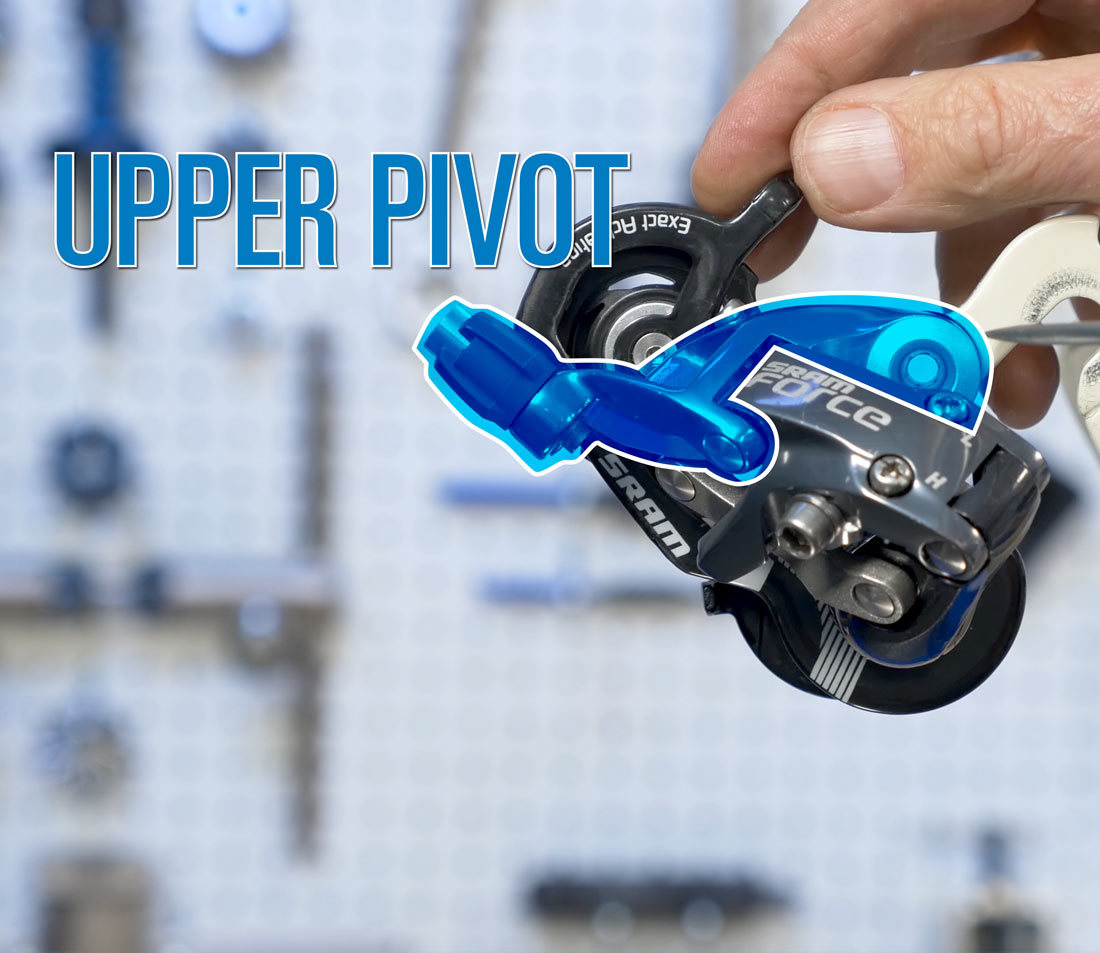
Derailleur upper pivot
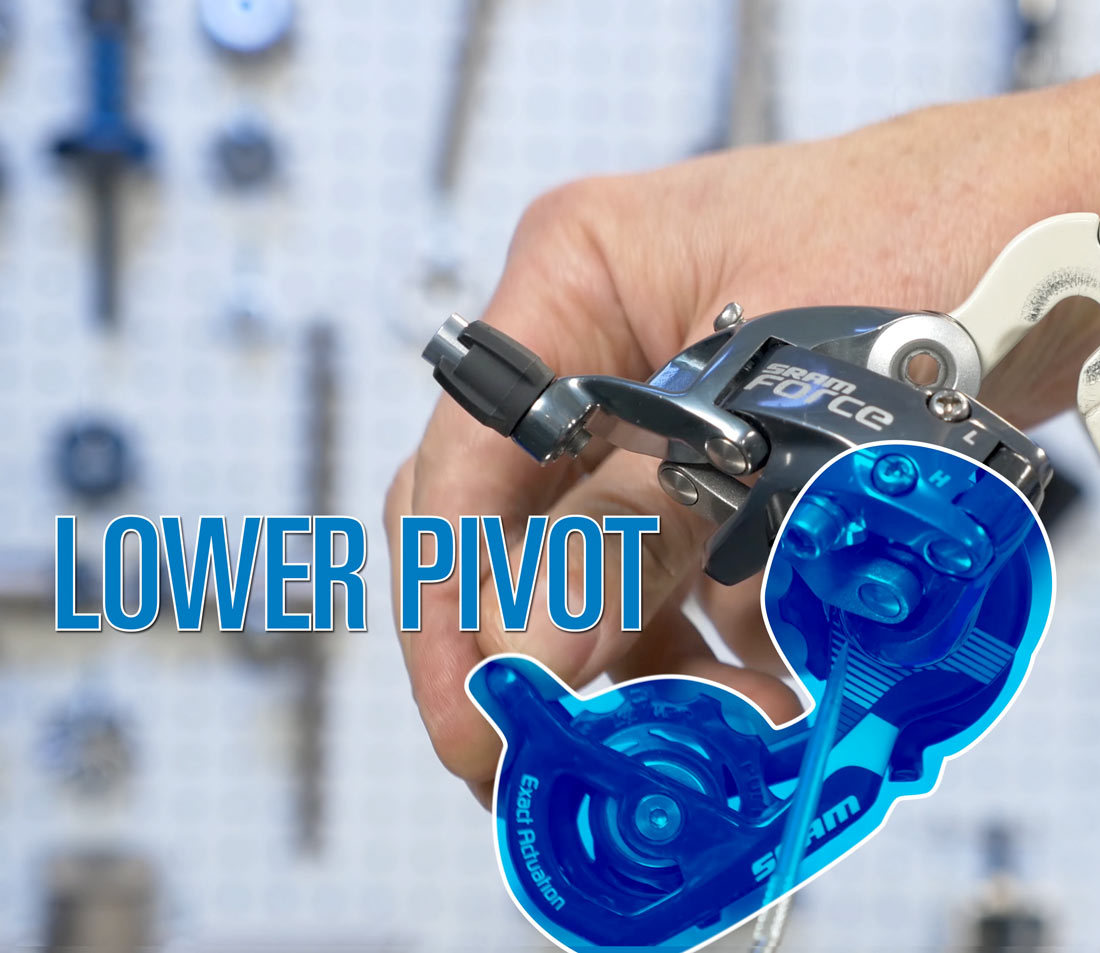
Derailleur lower pivot
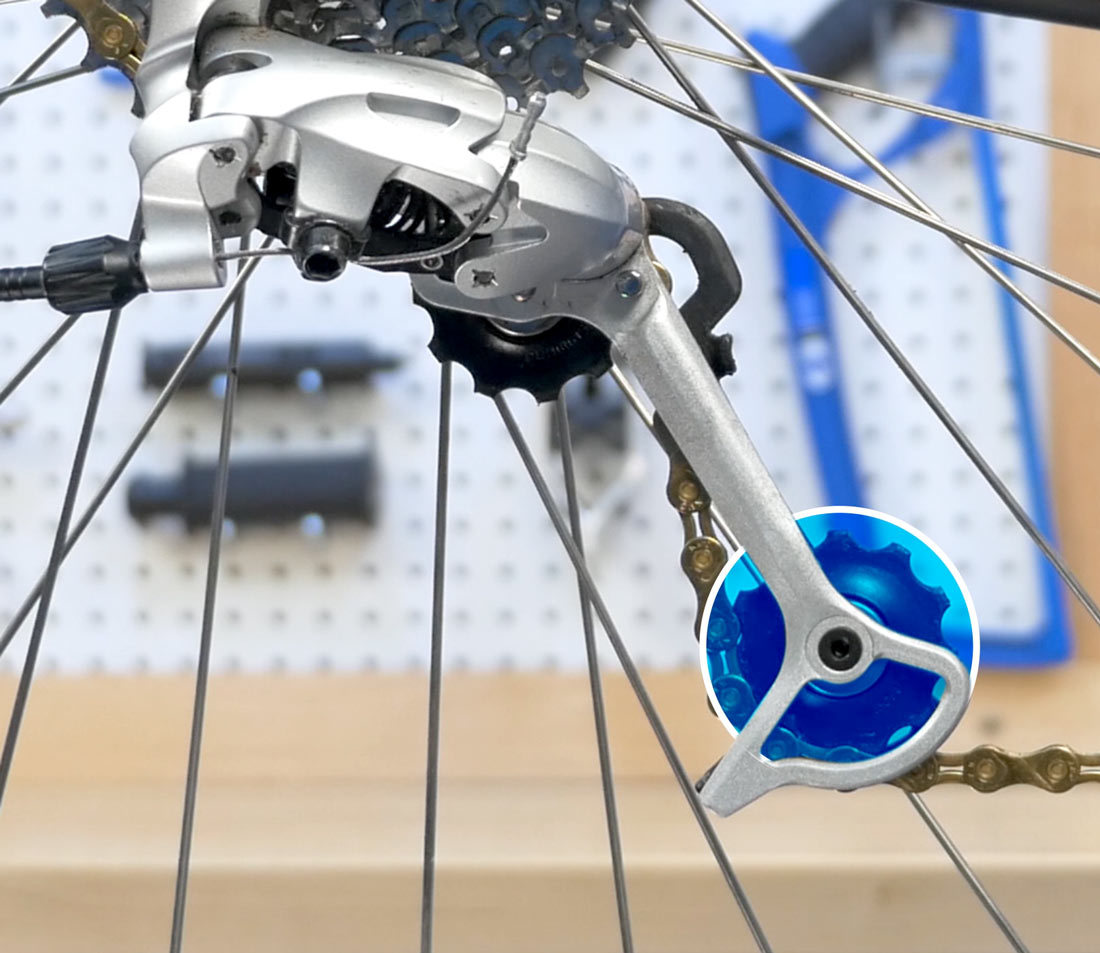
Rear derailleurs utilise a muzzle fitted with two pulleys. The lower pulley pulls backwards to give tension to the lower section of chain. It is called the tension caster, or 'T' caster for curt. The upper pulley guides the chain to the sprockets. It is called the guide caster, or 'G' pulley for short.
On mechanical-type derailleurs, a cable is secured at a pinch commodities. The cable is pulled to movement the cage inwards. A render spring in the linkage will move the derailleur the reverse direction when the cable is released. Electrical systems employ an electrical signal to trigger a motor to move the linkage.
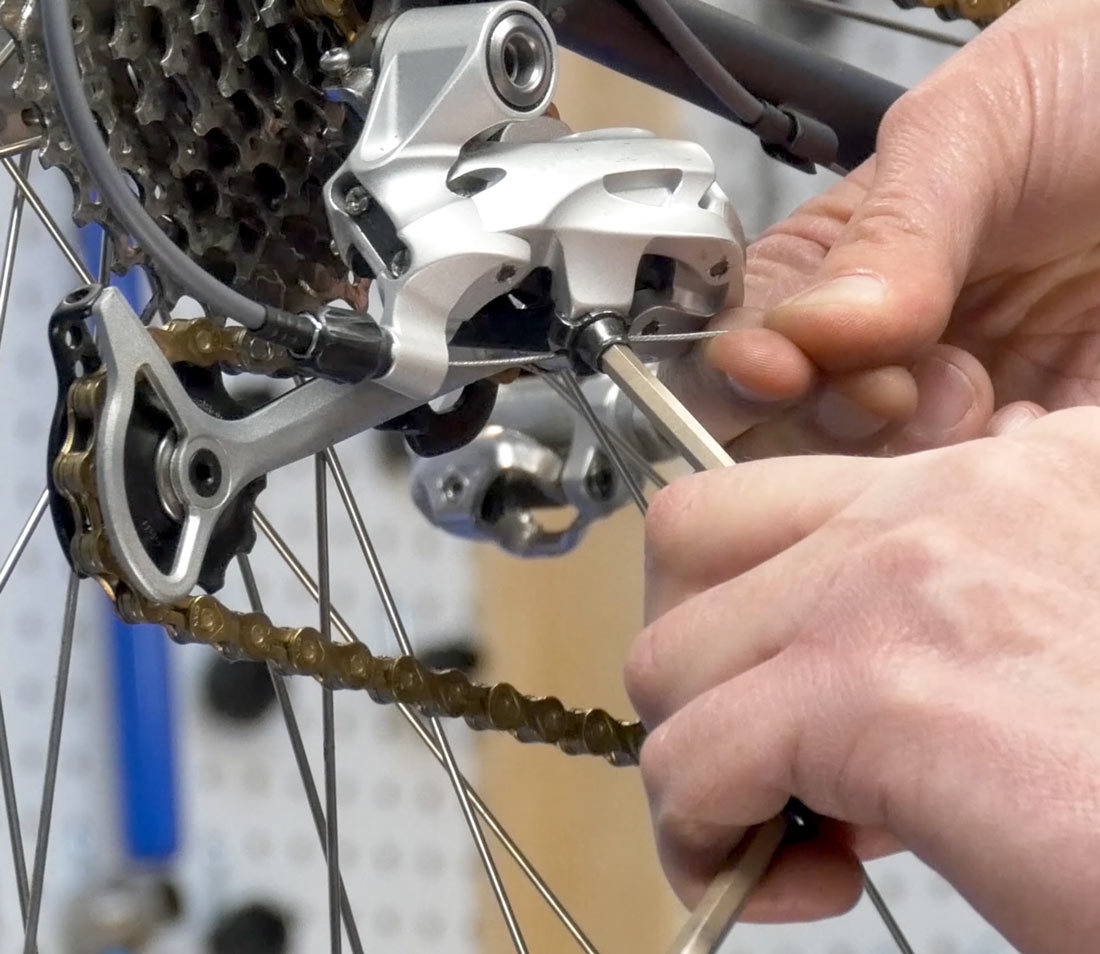
Derailleur cable secured by pinch bolt
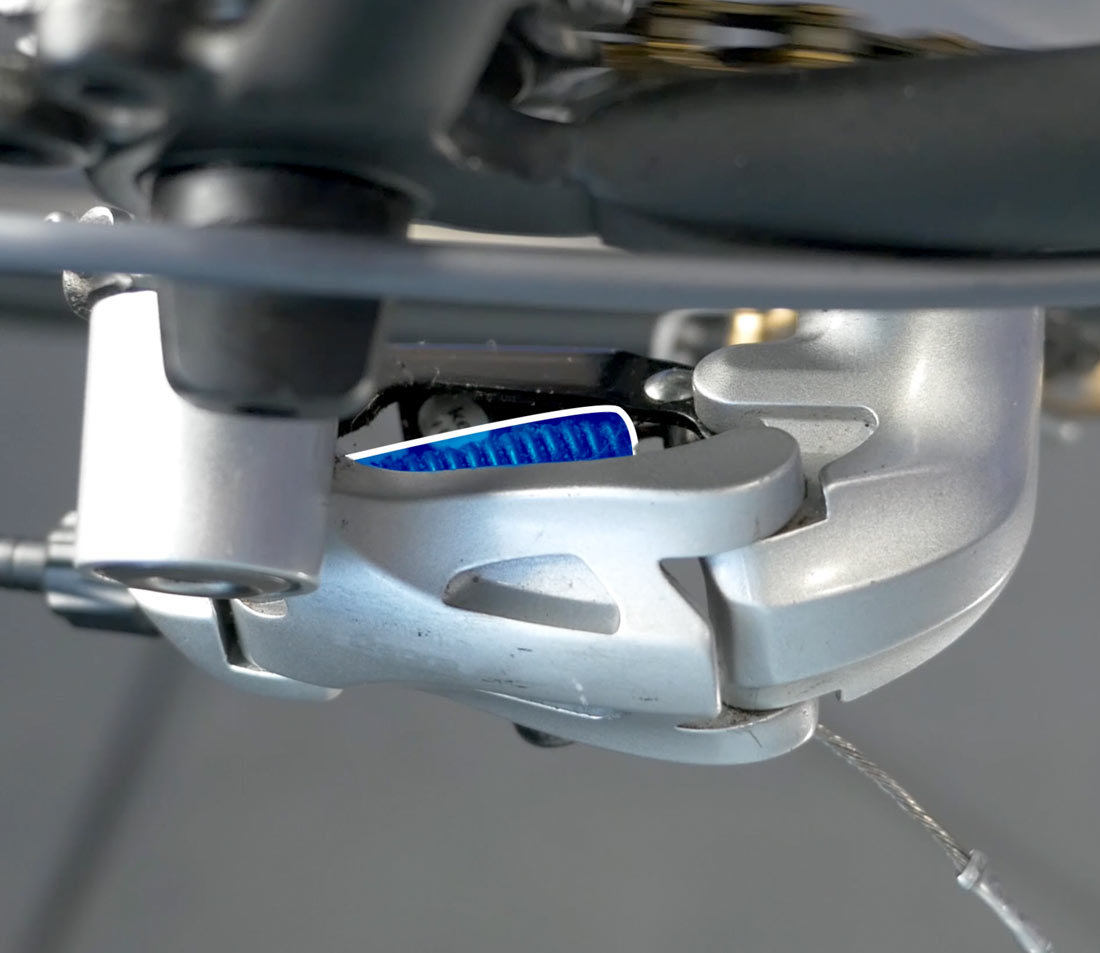
Wound leap in derailleur linkage
2
Indexing
The derailleur is connected to a shift lever with a cablevision passing through housing. Bikes unremarkably utilise an index shifter that moves the cable a modest predetermined corporeality with each click. Barrel adjusters tin be located at the derailleur body or the shift lever. They are used to correctly accommodate the shifting between cogs. Unthreading, or turning the barrel adjuster counter-clockwise at the shifter or derailleur takes upwards cable slack, or finer shortens the housing. This volition move the G-pulley slightly inward. Turning the barrel adjuster clockwise will requite the cable more slack, effectively lengthening the housing. This moves the G-pulley slightly outward.
iii
Limit Screws
Derailleurs are fitted with limit screws which are adapted to stop the derailleur from shifting too far inward or too far outward. The cease of the limit spiral strikes the linkage, and this stops pulley travel (2:51). The 'L' screw determines the limit of innermost cage travel. Tightening the 50-screw will restrict travel on the left side. The 'H' screw determines the limit of outermost muzzle travel. Tightening the 'H' limit spiral will restrict travel on the right side.
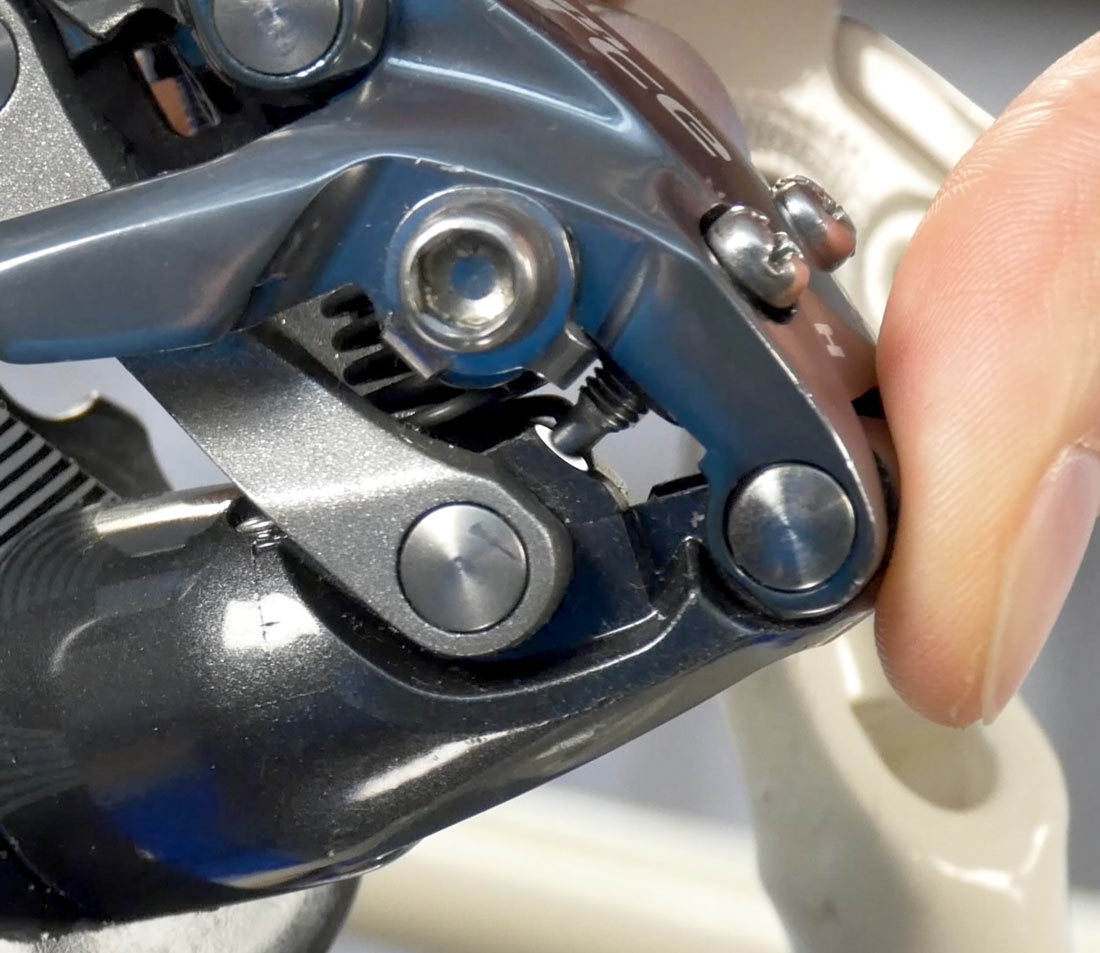
It is common to find another adjustment screw on the derailleur body chosen the 'B' screw. This screw controls the size of the gap betwixt the guide pulley and sprockets. Tightening the B-spiral will increase the size of this gap while loosening the B-screw will compress this gap.
And those are the basics of the rear derailleur.

Source: https://www.parktool.com/blog/repair-help/how-a-rear-derailleur-works
Posted by: tylerexclout.blogspot.com
0 Response to "How Does A Rear Entry Handicapped Van Squat Repair"
Post a Comment